
Introduction
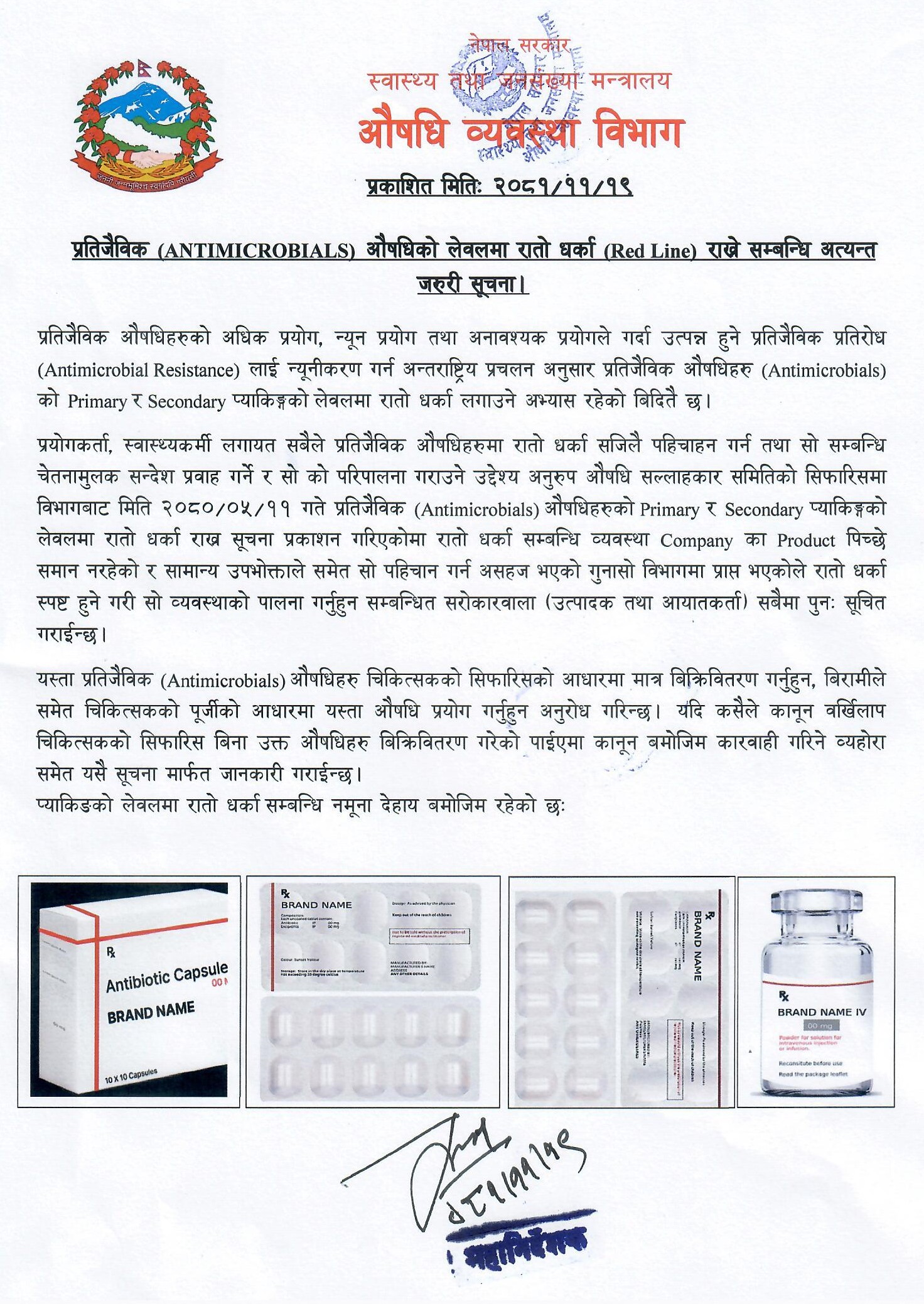
The Department of Drug Administration (DDA), Nepal, has issued a crucial directive regarding the use and packaging of antimicrobial drugs. To curb Antimicrobial Resistance (AMR), the government has mandated that Primary and Secondary packaging of all antimicrobials must carry a red line marking. This initiative aligns with global standards to regulate and control the misuse of antibiotics, ensuring responsible use in the healthcare sector.
Key Features of the Official Directive
1. The Purpose of the Red Line Labeling
- Helps in easy identification of antimicrobial drugs.
- Raises awareness among healthcare professionals and consumers regarding the rational use of antibiotics.
- Minimizes misuse and overuse of antibiotics, which contributes to antimicrobial resistance.
2. Government Directives for Pharmaceutical Companies
- All pharmaceutical manufacturers and importers must ensure that antimicrobial medicines are packed with red line labels on Primary and Secondary packaging.
- Companies must update their packaging designs to comply with this new regulation.
- This marking must be visible and distinguishable on the product’s blister packs, strips, and vials.
3. Guidelines for Healthcare Professionals and Pharmacists
- Antibiotics should only be dispensed with a valid prescription from a registered physician.
- Pharmacists must ensure that antimicrobial drugs are not sold without proper documentation.
- Violations of this directive will lead to legal consequences, including penalties and cancellation of licenses.
4. Public Awareness and Compliance Measures
- Nepal’s Drug Administration Department urges healthcare professionals, pharmacists, and the general public to adhere to these guidelines.
- The red line label serves as a visual cue to remind users about the proper use of antibiotics.
- Misuse of antimicrobial drugs may lead to severe health consequences, including drug-resistant infections.
Why This Matters?
Antimicrobial Resistance (AMR) is a growing public health crisis. Unregulated use of antibiotics leads to the emergence of drug-resistant bacteria, making infections harder to treat. The red line labeling initiative is a crucial step in Nepal’s commitment to combatting AMR and promoting rational drug use.

Official Document for Reference
-
Provincial Health System of Nepal (Updated)

Provincial Health System of Nepal After Federalism Nepal’s transition to a federal system in 2015 marked a transformative shift in its governance, with the establishment of seven provinces. This restructuring introduced a new level of government, the provincial level, tasked with the responsibility to manage and deliver health services within each province, enhancing accountability and…
-
HPV Vaccine is Going Regular in Nepal’s Immunization: Plan to Protect Daughters

Cervical cancer has long been a neglected public health issue in Nepal, disproportionately affecting women. However, in fiscal year 2082/83, the Government of Nepal and the Family Welfare Division are shifting from temporary interventions to permanent protection by integrating the HPV vaccine into routine “Regular Service” (Niyamit Sewa). As a health specialist tracking these systems,…
-
Report of the Task Force Formed to Address the Demands Related to Minimum Salary and Service Facilities of Nurses and Health Workers, 2082
Introduction: Beyond the Headlines The recent protests by health workers across Nepal painted a familiar picture of a workforce demanding professional dignity, fair pay, and better conditions. While the headlines announced that an agreement had been reached, the story they told was only the beginning. A deep dive into the official Task Force Report reveals…
-
Universal Health Coverage in Nepal: A Critical Analysis of the Gap Between Policy and Practice

1.0 Introduction: Defining Universal Health Coverage in the Nepali Context Universal Health Coverage (UHC), as defined by the World Health Organization (WHO), is the principle that all individuals and communities receive the full spectrum of essential health services—from health promotion to treatment, rehabilitation, and palliative care—without suffering financial hardship. This global aspiration is not merely…
Discover more from Public Health Concern Nepal
Subscribe to get the latest posts sent to your email.


