Nepal, a country known for its majestic Himalayas and vibrant culture, has also made remarkable strides in public health over the centuries. From ancient Ayurvedic practices to modern healthcare innovations, the history of public health in Nepal is a story of resilience, innovation, and progress. Whether you’re a student, researcher, or simply curious about global health, this article will take you on an engaging journey through Nepal’s public health evolution—complete with fascinating facts, key milestones, and actionable insights for the future.
Ready to dive into Nepal’s inspiring public health journey?
Let’s get started!
Why Should You Care About Nepal’s Public Health History?
Understanding the history of public health in Nepal offers valuable lessons for addressing global health challenges. It highlights how a nation with limited resources can achieve significant improvements in maternal health, disease eradication, and universal health coverage. Plus, it sheds light on ongoing challenges like geographical barriers, non-communicable diseases (NCDs), and healthcare equity—issues that resonate globally.
By the end of this article, you’ll not only gain a deeper appreciation for Nepal’s achievements but also discover actionable takeaways for building stronger, more equitable health systems worldwide.
Early Beginnings: Traditional Medicine and Colonial Influences (Pre-18th Century)
The Roots of Healing: Ayurveda and Spiritual Practices
Before formalized healthcare systems, Nepalese communities relied on traditional medicine like Ayurveda, which dates back thousands of years. Herbal remedies, spiritual rituals, and local healers were the backbone of healthcare. These practices remain deeply ingrained in Nepalese culture today, offering holistic approaches to wellness (Sharma, 2003).
The Rana Regime: Limited Healthcare Access (1846–1951)
During the Rana regime, healthcare was largely inaccessible to rural populations, with services concentrated in urban areas for the elite. This lack of infrastructure set the stage for urgent reforms after the fall of the Rana dynasty in 1951 (Dixit, 2005).
Fun Fact: Did you know that Ayurvedic texts like the Charaka Samhita influenced traditional healing practices across South Asia, including Nepal?
Mid-20th Century: Building the Foundation (1950s–1980s)
A Turning Point: Establishment of the Department of Health Services (1956)
In 1956, Nepal took a giant leap forward by establishing the Department of Health Services (DoHS). This marked the beginning of organized public health efforts, focusing on disease prevention, vaccination campaigns, and hospital management (Ministry of Health, 1956).
Eradicating Smallpox: A Global Success Story
By the 1970s, Nepal had successfully eradicated smallpox through mass vaccination campaigns supported by the World Health Organization (WHO). This achievement placed Nepal among the first countries in South Asia to eliminate the deadly disease (World Health Organization, 1977).
Key Statistic: Between 1960 and 1977, over 80% of Nepal’s population received smallpox vaccinations, showcasing the power of community-driven health initiatives.
Family Planning Programs: Empowering Women (1968)
In 1968, Nepal launched its first family planning program to address high fertility rates and maternal mortality. This initiative laid the groundwork for reproductive health services that continue to evolve today (Puri et al., 2014).
Post-1990 Era: Democratization and Decentralization (1990–2006)
National Health Policy (1991): A Blueprint for Change
Following the restoration of democracy in 1990, Nepal introduced the National Health Policy in 1991. This policy emphasized decentralization, aiming to improve access to healthcare in rural areas and reduce disparities (Government of Nepal, 1991).
Safe Motherhood Program (1998): Saving Lives, One Mother at a Time
To combat high maternal mortality rates, Nepal launched the Safe Motherhood Program in 1998. Key interventions included training skilled birth attendants, promoting institutional deliveries, and providing financial incentives to pregnant women (Pathak et al., 2012).
Impactful Result: Maternal mortality dropped from 539 deaths per 100,000 live births in 1996 to 239 in 2015—a testament to the program’s success (World Bank, 2016).
Polio Eradication: A Milestone Achievement (2014)
Nepal achieved polio eradication in 2014 after sustained immunization campaigns supported by UNICEF and WHO. Between 1996 and 2014, over 90% of children under five were vaccinated annually, ensuring herd immunity (UNICEF Nepal, 2014).
Challenges Amidst Conflict: The Maoist Insurgency (1996–2006)
The decade-long Maoist insurgency severely disrupted Nepal’s healthcare system. Health facilities were destroyed, medical supplies were scarce, and healthcare workers faced threats. Despite these challenges, humanitarian organizations like Médecins Sans Frontières (MSF) stepped in to maintain essential services (Regmi & van Teijlingen, 2010).
Did You Know? During the conflict, mobile health camps became a lifeline for rural communities, delivering critical care where hospitals were inaccessible.
Modern Developments: Progress and Persistent Challenges (2006–Present)
Maternal and Child Health Improvements
Nepal has made significant strides in maternal and child health:
Maternal Mortality: Reduced from 539 deaths per 100,000 live births in 1996 to 239 in 2015 (World Bank, 2016).
Infant Mortality: Dropped from 91 deaths per 1,000 live births in 1996 to 28 in 2016 (UNICEF, 2016).
These achievements were driven by initiatives like the Female Community Health Volunteer (FCHV) program, which trained women to deliver basic healthcare services at the grassroots level (Ojha et al., 2019).
Universal Health Coverage Goals
In alignment with the Sustainable Development Goals (SDGs), Nepal aims to achieve universal health coverage by 2030. The Social Health Insurance Program, launched in 2016, provides subsidized healthcare to marginalized groups, covering services such as hospital stays, surgeries, and medications (Ministry of Health and Population, 2016).
Tackling Non-Communicable Diseases (NCDs)
As infectious diseases decline, NCDs like cardiovascular diseases, diabetes, and cancer have emerged as major public health concerns. According to the WHO, NCDs account for nearly 60% of all deaths in Nepal (WHO Nepal, 2020). To address this, the government has integrated NCD prevention into primary healthcare and implemented awareness campaigns targeting lifestyle changes.
COVID-19 Pandemic Response (2020–2022)
The COVID-19 pandemic tested Nepal’s healthcare resilience. With limited ICU beds and oxygen supplies, the country faced immense pressure during peak waves. However, swift actions—such as setting up quarantine centers, launching vaccination drives, and partnering with international donors—helped mitigate the crisis (Kandel et al., 2021).
Pro Tip: Nepal’s response to the pandemic highlights the importance of preparedness and collaboration in tackling global health emergencies.
Key Statistics and Milestones:
- 1956-Establishment of the Department of Health Services (Ministry of Health, 1956)
- 1977-Smallpox eradication achieved (WHO, 1977)
- 1991-Introduction of National Health Policy (Government of Nepal, 1991)
- 1998-Launch of Safe Motherhood Program (Pathak et al., 2012)
- 2014-Polio eradication declared (UNICEF Nepal, 2014)
- 2015-Maternal mortality reduced to 239/100,000 live births (World Bank, 2016)
- 2016-Social Health Insurance Program launched (Ministry of Health, 2016)
- 2020-First case of COVID-19 reported (Kandel et al., 2021)
Looking Ahead: Building a Healthier Future
While Nepal has achieved remarkable progress, challenges like geographical barriers, limited funding, and rising NCDs persist. Addressing these issues requires continued investment in healthcare infrastructure, technology adoption, and community engagement.
Lastly,
The history of public health in Nepal is a testament to the power of perseverance and collaboration. From eradicating deadly diseases to improving maternal and child health, Nepal has overcome immense challenges to create a brighter future for its citizens. As the nation works toward achieving universal health coverage and addressing emerging threats like NCDs, the lessons learned from its past will continue to guide its path forward.
What’s Next? Share your thoughts in the comments below or subscribe to our newsletter for more updates on global health trends.
References
- Dixit, K. M. (2005). State of Nepal: A Historical Perspective. Kathmandu: Himal Books.
- Government of Nepal. (1991). National Health Policy. Kathmandu: Ministry of Health.
- Kandel, N., Lamichhane, P., & Gautam, S. (2021). “Nepal’s Response to the COVID-19 Pandemic.” Journal of Global Health Reports, 5(1), e2021034.
- Ministry of Health. (1956). Annual Report of the Department of Health Services. Kathmandu: Government of Nepal.
- Ministry of Health and Population. (2016). Social Health Insurance Implementation Plan. Kathmandu: Government of Nepal.
- Ojha, H. R., Regmi, K., & van Teijlingen, E. (2019). “Female Community Health Volunteers in Nepal: An Untapped Resource for Universal Health Coverage.” BMC Health Services Research, 19(1), 1-8.
- Pathak, L. B., Shrestha, D., & Sharma, G. (2012). “Safe Motherhood Initiatives in Nepal: Lessons Learned.” Journal of Midwifery & Women’s Health, 57(4), 387-393.
- Puri, M., Tamang, J., & Shah, I. H. (2014). “Improving Access to Safe Abortion Services in Nepal.” Reproductive Health Matters, 22(44), 120-129.
- Regmi, K., & van Teijlingen, E. (2010). “Impact of Armed Conflict on Health Systems in Nepal.” Conflict and Health, 4(1), 1-6.
- Sharma, V. P. (2003). History of Medicine in Nepal. Kathmandu: Mandala Book Point.
- UNICEF Nepal. (2014). Polio-Free Certification for Nepal. Retrieved from www.unicef.org.np
- WHO Nepal. (2020). Non-Communicable Diseases Country Profile. Geneva: World Health Organization.
- World Bank. (2016). Maternal Mortality Ratio in Nepal. Washington, DC: World Bank Group.
More From Us


-

Provincial Health System of Nepal (Updated)
Provincial Health System of Nepal After Federalism Nepal’s transition to a federal system in 2015 marked a transformative shift in its governance, with the establishment of seven provinces. This restructuring introduced a new level of government, the provincial level, tasked with the responsibility to manage and deliver health services within each province, enhancing accountability and…
-

HPV Vaccine is Going Regular in Nepal’s Immunization: Plan to Protect Daughters
Cervical cancer has long been a neglected public health issue in Nepal, disproportionately affecting women. However, in fiscal year 2082/83, the Government of Nepal and the Family Welfare Division are shifting from temporary interventions to permanent protection by integrating the HPV vaccine into routine “Regular Service” (Niyamit Sewa). As a health specialist tracking these systems,…
-
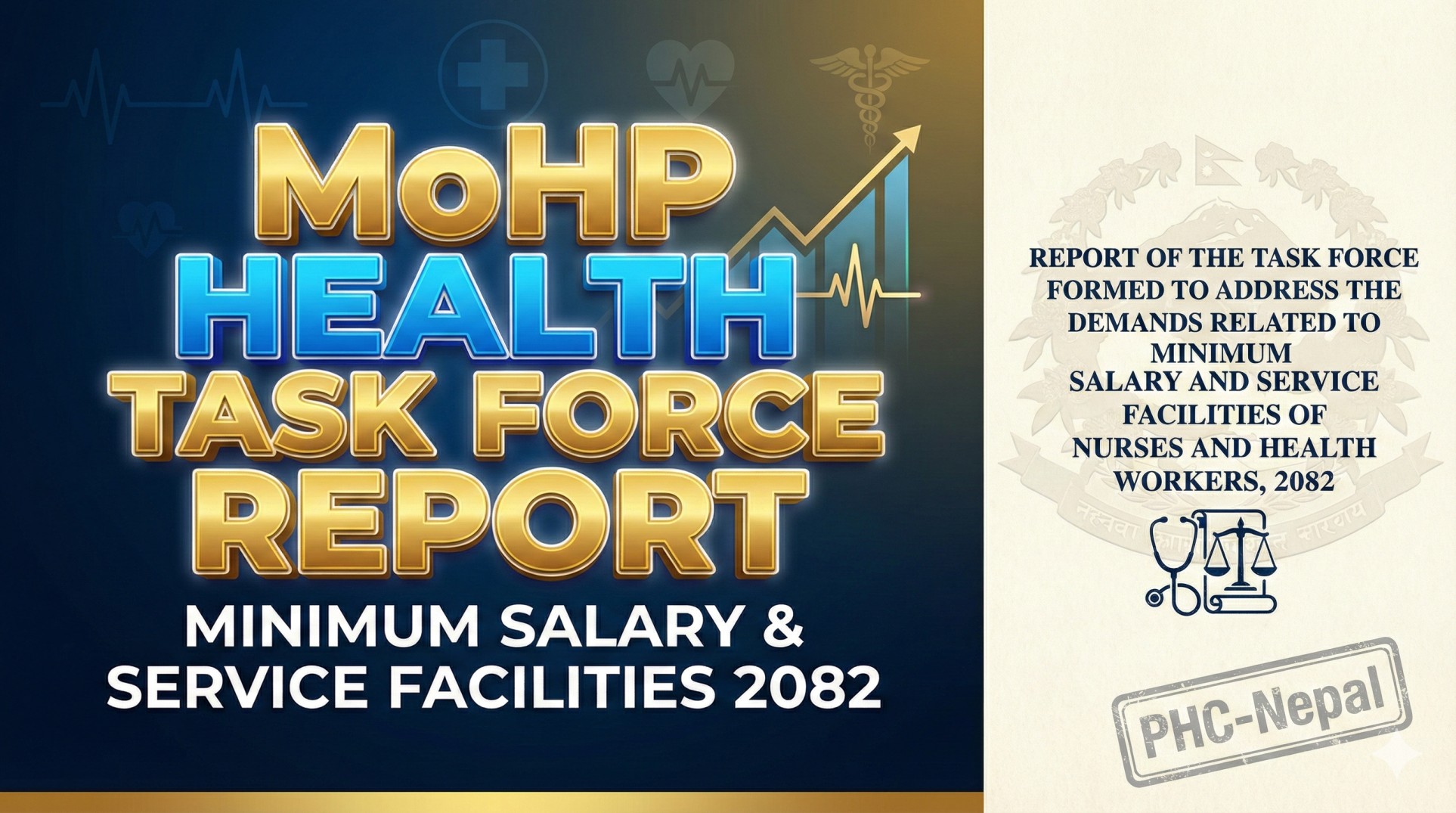
Report of the Task Force Formed to Address the Demands Related to Minimum Salary and Service Facilities of Nurses and Health Workers, 2082
Introduction: Beyond the Headlines The recent protests by health workers across Nepal painted a familiar picture of a workforce demanding professional dignity, fair pay, and better conditions. While the headlines announced that an agreement had been reached, the story they told was only the beginning. A deep dive into the official Task Force Report reveals…
-

Universal Health Coverage in Nepal: A Critical Analysis of the Gap Between Policy and Practice
1.0 Introduction: Defining Universal Health Coverage in the Nepali Context Universal Health Coverage (UHC), as defined by the World Health Organization (WHO), is the principle that all individuals and communities receive the full spectrum of essential health services—from health promotion to treatment, rehabilitation, and palliative care—without suffering financial hardship. This global aspiration is not merely…
-

The Story Behind the Story: How Reporting on Suicide Can Save Lives?
Introduction: The Hidden Power of a News Story We all consume news daily, but we rarely stop to consider how the way a story is told can have life-or-death consequences. This is never more true than when the subject is suicide. Suicide is a major public health issue. Globally, over 700,000 people die by suicide…
-

The Rising Threat of Dengue: Myths, Symptoms, and Life-Saving Prevention Strategies
Examine Nepal’s escalating dengue crisis as the virus expands from the Terai to the Himalayas, driven by rapid urbanization and climate change. This overview covers the record-breaking 2022–2023 outbreaks, essential clinical protocols for managing severe dengue, and the urgent need for decentralized public health strategies to mitigate this shifting threat
-

Healthy Mind, Healthy Life: Unveiling the Mental Health Awareness Campaign 2082
At Public Health Concern Nepal (PHC-Nepal), we believe there is no health without mental health. Today, we are proud to share the details of the upcoming national initiative: “Swastha Man Swastha Jiwan: Mental Health Awareness Campaign 2082.” With the powerful slogan “Man Ko Kura Garau” (Let’s Talk About the Mind), this campaign aims to break…
-

World Menstrual Hygiene Day
World Menstrual Hygiene Day, observed every year on 28 May, has become a powerful global platform to speak openly about periods, combat stigma, and demand better access to menstrual products, infrastructure, and information. In Nepal, where majestic Himalayan landscapes meet deeply rooted social and cultural norms, menstrual health remains a public health, education, gender equality,…
-

Nepal’s Standard Treatment Protocol (STP) for Basic Health Services (BHS) Package 2078
Discover the key components of Nepal’s Standard Treatment Protocol (STP) for Basic Health Services (BHS) Package 2078. A comprehensive guide for health professionals and students covering emergencies, maternal health, NCDs, and rational prescribing.
-

Global Report on Neglected Tropical Diseases (NTDs) 2025: Stronger Together, Towards 2030
Neglected Tropical Diseases (NTDs) remain among the world’s most persistent public health challenges. They disproportionately affect over one billion people, primarily among the poorest and most vulnerable communities. The Global Report on Neglected Tropical Diseases 2025 was released by the World Health Organization (WHO). It marks a vital milestone in tracking global and regional progress.…
-

Nepal’s Health Sector 2025: A Data-Driven Analysis of the NJAR 2025 Report
A deep dive into Nepal’s National Joint Annual Review (NJAR) 2081/82. Analyze critical data on LDC graduation readiness, health financing gaps, provincial disparities, and the rising burden of NCDs.
-

Nepal Health Fact Sheets 2025: Global Health, Local Impact (NJAR 2025)
The Health Fact Sheet 2025, anchored by Nepal’s National Joint Annual Review (NJAR), offers a compelling snapshot of global health priorities, regional progress, and data-backed insights for policymakers, researchers, and health advocates worldwide. Released in November 2025 by the Ministry of Health and Population’s Department of Health Services, the Nepal Health Fact Sheets 2025 offer…
-

How to Reduce Belly Fat Permanently?
Arre yaar, that extra “pet ko motai” staring back at you in the mirror?You’re not alone — every second Nepali over 30 is Googling “belly fat kaise kam kare” or “pet saraune upay” right now. Blame it on those late-night momos, endless chai breaks at the office, or just the stress of Kathmandu traffic. But…
-

Why Do Body Parts Twitch Suddenly?
10 Real Reasons You’re Feeling That “Farfar” (And How to Stop It Fast) Hey, let’s be honest — almost every Nepali has felt it.You’re sitting in a microbus, scrolling Instagram, and suddenly your left eyelid starts doing its own little disco.Or you’re trying to sleep and your calf muscle jerks so hard it feels like…
-

Nepal’s National Action Plan on Antimicrobial Resistance (2024-2028): Combating the Silent Pandemic
In an era where superbugs threaten global health, Nepal is stepping up with its second National Action Plan (NAP) on Antimicrobial Resistance (AMR) for 2024-2028. Aligned with the World Health Organization’s (WHO) Global Action Plan, this multisectoral strategy addresses the rising tide of antibiotic-resistant infections that could push millions into poverty and derail Sustainable Development…
-

Comparing Nepal’s “One Palika One Public Health Officer” Initiative with India’s ASHA Program: Grassroots Health Strategies in South Asia
In the realm of public health in South Asia, both Nepal and India have implemented innovative programs to bridge gaps in healthcare access at the community level. Nepal’s recently launched “One Palika One Public Health Officer” program, introduced in fiscal year 2082/83 (2025-2026), deploys professional public health officers to local governments (Palikas) for technical leadership…
-

One Palika (Local Level) One Public Health Officer: Guidelines, JD and Detail
Nepal’s healthcare environment is changing. In response, the Ministry of Health and Population (MoHP) has initiated a pioneering program called “One Palika, One Public Health Officer” (Ek Palika: Ek Janaswaasthya Adhikrit). Scheduled to begin in the fiscal year 2082/83 (around mid-2025), this program intends to assign qualified public health professionals to each local government (Palika)…
-
Understanding Hypotheses in Academic Research: A Complete Guide for Students and Scholars
A well-crafted hypothesis is the foundation of rigorous academic research. This guide explores the types of hypotheses—null, alternative, simple, complex, directional, and more—while offering practical steps for formulating testable predictions. Whether you’re a student, scholar, or public health practitioner, understanding how hypotheses shape research design and evidence-based decision-making is essential for impactful inquiry.
-
The GBD 1990-2023 Story: How Global Health Has Changed (And Why Nepal’s Fight is Different)
A single, deep analysis of all GBD reports. See the 30-year global health trend from 1990 to 2023, and a GBD 2023 deep dive on Nepal’s unique health burden (air pollution, COPD).
Discover more from Public Health Concern Nepal
Subscribe to get the latest posts sent to your email.